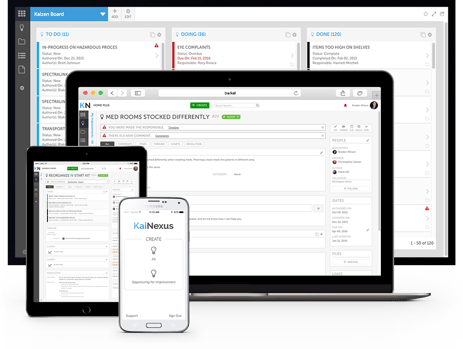


Captures improvement from every level. Frontline workers submit ideas from their phone. Leaders manage events and projects. Strategy deployment cascades goals from the executive suite to the teams doing the work. It all lives in one platform -- not three tools and a spreadsheet.
Makes improvement visible across the organization. Leaders see what's happening at every site without chasing status reports. Teams see what other teams have solved. A breakthrough at one facility becomes available to every facility, instead of sitting in someone's email.
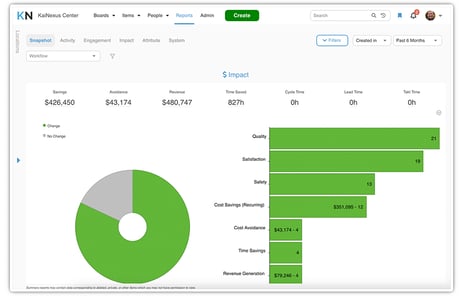
Tracks real impact. Every improvement is connected to measurable outcomes -- cost savings, quality gains, time saved, safety improvements. The platform rolls it up automatically. No more assembling quarterly reports to justify the program.
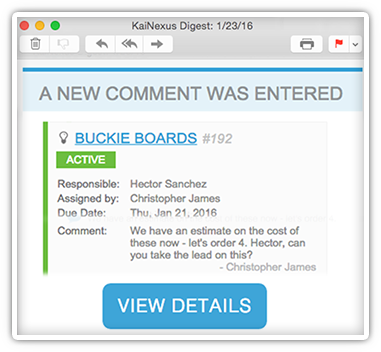
Keeps work moving. Configurable workflows route improvements through the right approvals. Smart notifications flag stalled work before it dies quietly. Nothing sits in a queue waiting for someone to remember to check a spreadsheet.
Sustains what you've built. Standard work documentation, habit tracking, and leader standard work routines are built in -- not bolted on from a separate tool. The gains from last quarter's kaizen event are still holding this quarter because the system is designed to check.

Get insight into engagement, impact, and activity with reports that drill down to any level of the organization. Know where your help is needed, track progress toward goals, and know who is working on what.

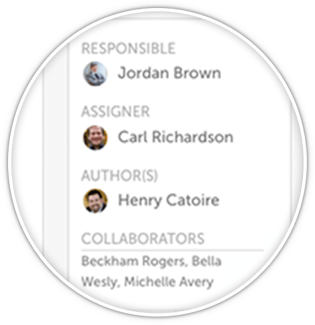
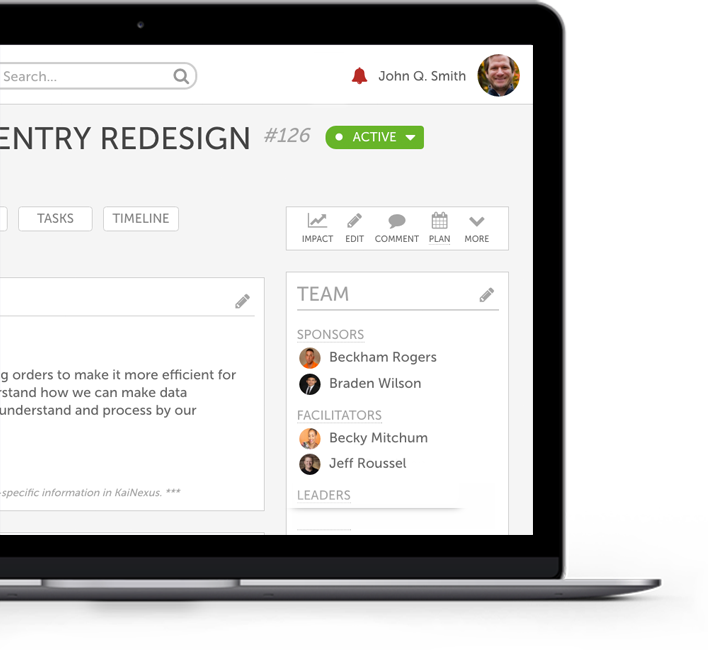
Empower cross-functional teams to collaborate regardless of time or distance. Give them insight into what their team is working on, store all data in a single location, and keep everyone in the loop with smart notifications.

Get more people involved in your improvement culture with features that inspire innovation, promote knowledge sharing, and keep improvement in the forefront of everyone's minds.

Get everyone on the same page with software that aligns daily improvements with strategic inititiaves. Ensure that your entire organization is engaged in achieving your goals.