
Most improvement doesn't come from big projects. It comes from people who notice small problems in their daily work, feel safe raising them, and get a quick, useful response from their leaders.
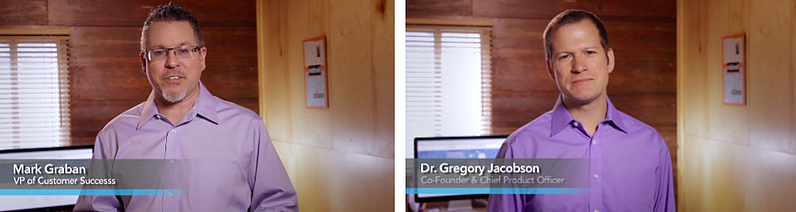
These twelve continuous improvement videos cover the practices that make that happen. Each runs two to three minutes. They're presented by Greg Jacobson, MD, KaiNexus co-founder and CEO, and Mark Graban, KaiNexus Senior Advisor. The videos draw on Lean and kaizen principles, with examples from hospitals, factories, and offices. They're short enough to play at the start of a team huddle, and they work well for onboarding people who are new to an improvement program.
The same principles shaped how the KaiNexus software was designed. Check out these videos below or on our YouTube channel via this YouTube Playlist.
Click on the video titles to view them on their own pages:
Kaizen means change for the better. In practice, it means going after thousands of small ideas instead of waiting for one million-dollar idea. This video explains how to spot your first opportunity for improvement: any moment when you think, "Why do we do it this way?" Examples include merging two forms into one and adding traction strips to a loading dock ramp. Presented by Mark Graban.
A one-minute delay that recurs every week for many people adds up, but it rarely feels worth reporting. This video uses two real examples. The first is foot x-rays ordered with two views when three were needed. The second is an invoice form whose field order caused rework. Neither was a technology problem. Both traced back to inconsistent orientation for new staff. Presented by Mark Graban.
"Don't bring me problems, bring me solutions" keeps a lot of problems hidden. This video makes the case for raising a problem even when you don't know the fix, because a coworker, a manager, or someone in another department may already have it. It also draws the line between identifying a real opportunity and venting. Presented by Mark Graban.
The goal is to work smarter, not faster. This video defines value as the work a customer would pay for, and waste as anything that gets in the way of it. Here's a practical test: every time you search for supplies, equipment, or information, or build a workaround, you've found a step worth fixing. Presented by Mark Graban.
Most errors come from flawed processes and systems, not careless individuals. The video uses the case of actor Dennis Quaid's newborn twins, who were given an adult dose of a blood thinner in a NICU. It asks what allowed the error in the first place. It also encourages people to report near misses and risks before anyone gets hurt. Presented by Greg Jacobson, MD.
When ideas sit for a month in a suggestion box, people learn to stop sharing them. This video explains why leaders should acknowledge every opportunity for improvement within a day or two, even when the fix will take longer. A fast response tells people improvement is a real priority, more clearly than any announcement. Staff also get tips for following up with their own managers. Presented by Greg Jacobson, MD.
A supervisor's job isn't to approve or reject ideas. It's to work with the person until they find something that can be implemented. In the video's example, an employee asks for a new parking garage. The real problem turns out to be customers getting wet in the rain, and umbrellas or reserved visitor parking can fix that. Presented by Greg Jacobson, MD.
As one frontline employee told Mark, "That box is where good ideas go to die." This video explains why suggestion boxes usually fail. Distant committees review ideas monthly or quarterly. They vote yes or no without talking to the person who submitted the idea. Ideas often vanish. The alternative is a fast, transparent process where coworkers and supervisors can see ideas and help put them into practice. Presented by Mark Graban.
If kaizen only happens during a few week-long events each year, it isn't continuous. This video explains when a formal kaizen event makes sense and when a small daily change is the better fit. One example: replacing a loud automatic paper towel dispenser in a hospital nursery with a quiet manual one that doesn't wake the babies. Presented by Greg Jacobson, MD.
Waiting for the perfect solution often means doing nothing. One NICU wanted more privacy for nursing mothers, and it got there through a series of small changes:
No single change solved the problem. Together, they nearly did. Presented by Mark Graban.
Some changes are low-cost, low-risk "just do its." Others need data before anyone can say they worked. This video uses a doctor's visit as an analogy for when to test more carefully. It shows how the PDSA cycle helps you confirm an improvement instead of assuming it. Presented by Greg Jacobson, MD.
If your manager is standing right there, why log the idea at all? This video gives four reasons:
The goal is more face-to-face conversation, not less. Presented by Greg Jacobson, MD.
You can find more KaiNexus videos on our YouTube channel. For a written overview, read Learn Best Practices for Continuous Improvement. To see how organizations use KaiNexus to capture, respond to, and measure improvement, get a demo.






Copyright © 2026
Privacy Policy